




War, Oil Shock ,Fragile Diplomacy,Energy Crisis
 March 26, 2026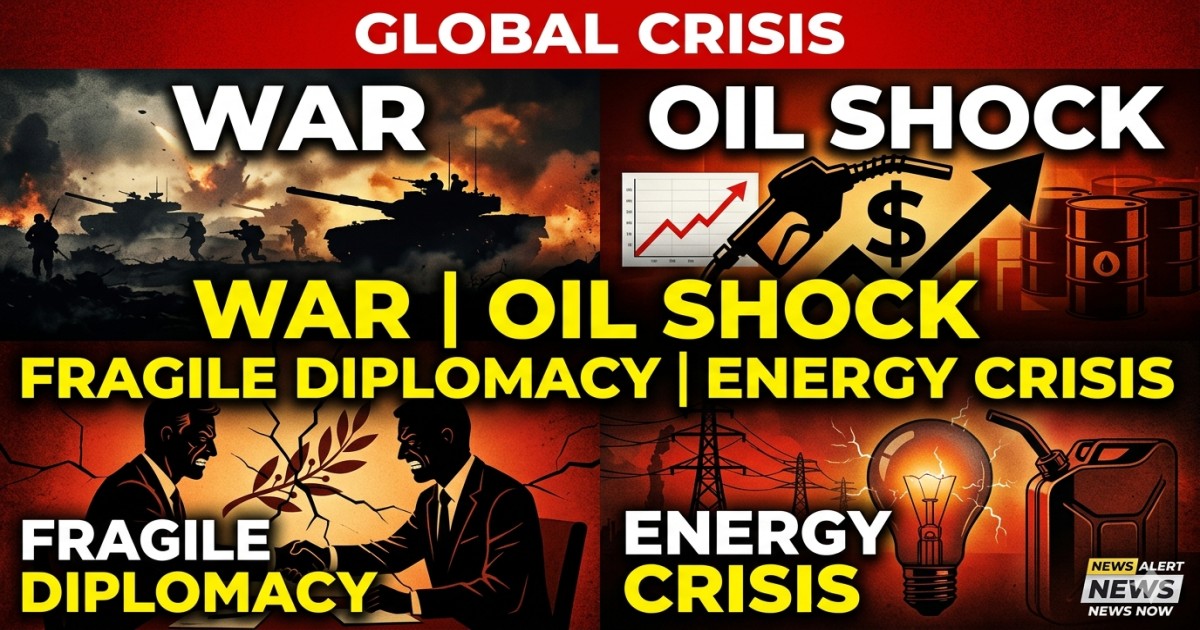
War, Oil Shock & Fragile Diplomacy: The World on Edge
From the Strait of Hormuz to Capitol Hill, a 27-day conflict has set off cascading crises across energy markets, global alliances, and domestic politics — with no clear resolution in sight.
Compiled · March 26, 2026 · Sources: Reuters, CNN, Al Jazeera, Indian Express, CNBC, UN News, IMF, EIA
Twenty-seven days after the United States and Israel launched coordinated strikes against Iran on February 28, the world is navigating one of its most volatile geopolitical and economic moments since the 2022 Ukraine invasion. Oil is trading above $100 a barrel, thousands of seafarers are stranded in the Strait of Hormuz, and the United Nations has warned the conflict is “totally out of control.” Yet even as military strikes intensify, a thread of diplomacy — however fragile — is keeping open the possibility of a negotiated exit.
Military Escalation: Strikes and Deployments
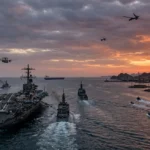
The United States military is preparing to send between 3,000 and 4,000 soldiers from the elite 82nd Airborne Division at Fort Bragg, North Carolina to the Middle East, according to Reuters. The deployment comes even as President Trump publicly signals interest in a diplomatic resolution — a contradiction that has left analysts and allies scrambling for clarity.
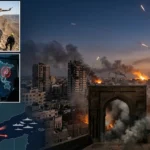
On the ground and in the air, the pace of strikes has not slowed. Al Jazeera’s live coverage confirms that US-Israeli attacks on Iran are increasing in both number and intensity, with Israel announcing extensive airstrikes on central Isfahan. Iran carried out retaliatory strikes against Israel and several Gulf nations on Thursday. Iran’s state television building was also hit in a separate strike, killing one person.
In Lebanon, the toll has been devastating. At least 1,072 people have been killed and more than 2,966 wounded since fighting escalated on March 2 — with 33 deaths in the last 24 hours alone. UN Secretary-General António Guterres warned that Lebanon must not become “the next Gaza,” and Israeli officials have not ruled out a ground offensive south of the Litani River.
27Days of conflict
70+Iranian commanders killed
1,072Deaths in Lebanon
2,000Vessels stranded in Hormuz
Iran’s Leadership Decimated
Since the first wave of strikes on February 28, Iran’s military and political chain of command has been systematically targeted. At least 70 senior Iranian officials have been confirmed killed, including roughly 40 military commanders in the opening hours. Among the highest-profile losses: Ali Larijani, secretary of the Supreme National Security Council — described as the most senior figure killed since Supreme Leader Khamenei was assassinated on Day 1 — and Gholamreza Soleimani, commander of the Basij militia, both confirmed killed in Israeli strikes on March 17.
On March 20, IRGC spokesperson Ali Mohammad Naini was killed in a pre-dawn US-Israeli airstrike, just hours after he had publicly warned of a coming “surprise” for Israel. The systematic nature of the targeting has raised questions in international law circles about the boundaries of the conflict, though Washington has declined to characterize the strikes as an assassination campaign.
Diplomacy: Talks, Denials, and a 15-Point Proposal
The diplomatic picture is murky and rapidly shifting. President Trump confirmed that Vice President JD Vance and Secretary of State Marco Rubio are actively engaged in negotiations, expressing optimism that a deal could be within reach. The New York Times reported, citing two unnamed officials, that Washington sent Tehran a 15-point proposal via Pakistan — though Iran’s foreign ministry denied any direct dialogue was occurring, calling reports of negotiations “baseless.”
Trump announced he had paused a threatened strike on Iran’s power grid “based on the fact we’re negotiating,” adding: “They’re talking to us, and they’re talking sense.” A source close to Tehran told CNN that Iran is open to hearing “sustainable” proposals — but insists it will not abandon uranium enrichment, a core sticking point.
“Whether diplomacy or escalation wins out in the coming days will determine not only the fate of the Middle East — but the trajectory of the global economy for years to come.”
Internationally, Pakistani Prime Minister Shehbaz Sharif offered Islamabad as a neutral host for negotiations. China’s top diplomat Wang Yi urged Iran that “talking is always better than fighting.” French President Macron called on Tehran to engage in good faith, while European Commission President Ursula von der Leyen demanded an immediate halt to hostilities — putting Brussels in direct tension with Washington’s current military posture. EU foreign policy chief Josep Borrell warned that a prolonged conflict would inflict “generational damage” on the global economy. Secretary of State Rubio is traveling to France this week to persuade skeptical G7 allies to support the US position.
Energy Crisis: $100 Oil and No Quick Fix
The Strait of Hormuz — through which roughly 20% of global oil flows — remains partially closed, with approximately 2,000 vessels and 20,000 seafarers stranded. France’s military chief is in talks to help restore maritime navigation. The IMF has warned that a sustained closure could push Brent crude as high as $200 a barrel in a worst-case scenario.
Brent crude, which peaked above $112 on March 19, is currently trading between $99 and $104 a barrel — more than $26 higher than a year ago. Goldman Sachs warned this week that elevated prices could persist through 2027 if Hormuz flows do not normalize by April. The bank’s base case assumes a gradual four-week reopening beginning next month, but notes that near-term price movements are being driven by shifts in the perceived probability of worst-case scenarios.
Japan began releasing state oil reserves today — equivalent to 30 days of domestic consumption — its first such release since the Ukraine invasion. Tokyo had already released 15 days’ worth of private-sector reserves on March 16. Separately, the International Energy Agency coordinated an emergency release of 172 million barrels across 32 member nations, with the US contributing the largest share from its Strategic Petroleum Reserve. Despite these moves, investors remain unconvinced the releases will be sufficient. The Philippines declared a state of national energy emergency, with President Ferdinand Marcos Jr. warning of “imminent danger” to the country’s supply chains.
Global Economy: Recession Warnings Mount
The economic fallout is spreading fast. The European Central Bank revised inflation projections upward, citing Middle East energy prices as the primary driver, and flagged Germany, Japan, and the United Kingdom as particularly vulnerable to a recession before year-end. UNCTAD had already forecast global growth slowing to 2.7% in 2026 — below pre-pandemic averages — and the war has deepened those concerns, with multiple institutions revising forecasts further downward. QatarEnergy confirmed that missile attacks reduced its LNG export capacity by 17%, and that repairs could take up to five years.
US Domestic: DHS Standoff Nears Resolution
On the home front, Congress is inching toward a deal to end a prolonged budget standoff that has disrupted federal agencies. Senators are reportedly close to an agreement to fund most of the Department of Homeland Security, while ICE enforcement funding is being negotiated separately. ICE agents have been deployed to 14 airports to manage travel disruptions caused by the partial DHS shutdown — compounding an already strained spring break travel season. A final vote is expected before the weekend.
Meanwhile, the historic installation of Sarah Mullally as the 106th Archbishop of Canterbury — the first woman to hold the position — offered one moment of ceremony amid a week otherwise dominated by conflict and crisis.
Primary Sources — Verified March 26, 2026
- Reuters — US Military Deployment & Iran Diplomacy
- CNN — Goldman Sachs: Oil Prices Could Last Through 2027
- Al Jazeera — Day 27 Middle East Live Coverage
- CNBC — Brent Crude Falls as Trump Signals Iran Talks
- Indian Express — India LPG Supply Risk & Market Impact
- Fortune — Current Oil Price: March 24, 2026
- US Energy Information Administration — Short-Term Energy Outlook, March 2026
- UN News — Middle East Live Coverage, Day 26
- IMF — Energy Price & Global Growth Forecast Briefing
- New York Times — US Sends 15-Point Proposal to Iran via Pakistan
✓ Verified · All reporting sourced from Reuters, CNN, Al Jazeera, CNBC, Indian Express, UN News, IMF, EIA & Fortune