








The Japanese Secret to Living to 100
 March 28, 2026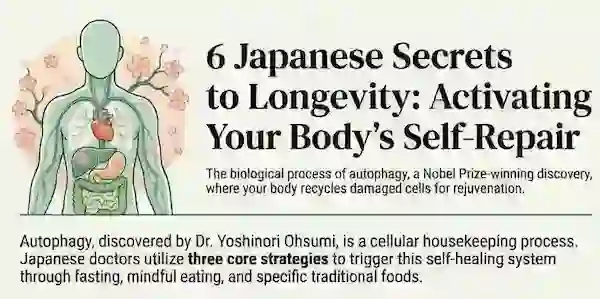
The Japanese Secret to Living to 100: How to Activate Autophagy for Ultimate Health
The Japanese Secret to Living to 100 : Did you know that your body comes equipped with an incredible, built-in system designed to heal itself, help you stay lean, and even protect you against severe diseases like cancer [1]?
For decades, the world has looked to Japan—home to some of the longest-living populations on earth—for the secrets to a long and vibrant life. In this article, we are going to explore the simple yet profoundly powerful daily habits inspired by five legendary Japanese scientists and physicians who have completely revolutionized our modern understanding of health and longevity [1].
These pioneers include Dr. Yoshinori Ohsumi, Dr. Takayuki Teruya, Dr. Shigeaki Hinohara, Dr. Yumi Ishihara, and Dr. Hiromi Shinya [1]. By the end of this comprehensive guide, you will understand the fascinating biological process known as “autophagy,” and more importantly, exactly how you can harness it in your daily life to promote incredible health and vitality [1, 2].
What is Autophagy? Your Body’s Built-In Detox
To understand Japanese longevity, we first must understand autophagy. Simply put, autophagy is your body’s natural recycling system and a built-in detox mechanism that keeps your cellular structure clean and highly efficient [2].
Think of it as cellular housekeeping [2]. Over time, our cells accumulate damaged components. Through autophagy, your body breaks down and safely removes these damaged parts, making room to regenerate stronger, healthier cells [2].
This groundbreaking process was brought to the global spotlight by Dr. Yoshinori Ohsumi, a Nobel Prize-winning scientist who discovered that autophagy becomes especially active during periods of physiological stress, such as fasting [2]. As Dr. Ohsumi emphasized during his Nobel lecture, our cells simply cannot survive without this essential process [2].
When autophagy is functioning optimally, it helps your body repair itself, maintain a healthy weight, and significantly lower the risk of age-related diseases like cancer [2]. Today, this biological cleansing process is widely recognized by the scientific community as being intimately linked to cancer prevention, immunity, slowing down the aging process, and warding off neurodegenerative diseases [2].
The key takeaway for your daily life? Supporting your body’s internal cleaning system is crucial for long-term health [3]. Here are three Japanese, science-backed lifestyle habits to help you activate autophagy naturally.
Habit 1: Activate Autophagy with Intermittent Fasting
One of the absolute most effective ways to trigger your body’s cellular housekeeping is through intermittent fasting, a practice that has been deeply woven into the traditional Japanese lifestyle for generations [3].
Intermittent fasting simply means creating a daily window of time where you intentionally do not eat, which allows your body to shift its energy away from digesting food and toward deep cellular repair [3]. Many Japanese researchers, deeply inspired by Dr. Ohsumi’s discoveries, advocate for a natural daily fasting window of 12 to 16 hours [3]. This eating rhythm mirrors how older generations in Japan naturally consume their food, often intuitively skipping meals or maintaining long gaps between dinner and breakfast, unknowingly supporting their bodies’ renewal processes [3, 4].
Dr. Takayuki Teruya, a prominent Japanese researcher specializing in the metabolic effects of fasting, highlights that fasting is about much more than just losing weight [4]. His research provides three critical insights into why fasting is a cornerstone of longevity:
- Metabolic Activation: Fasting stimulates vital metabolic pathways, leading to an increased production of metabolites that are responsible for energy production and antioxidant defense [4]. This rejuvenates your entire metabolic process [4].
- Antioxidant Generation: Dr. Teruya’s studies indicate that fasting naturally elevates the body’s levels of antioxidants [4]. These antioxidants are essential for neutralizing harmful free radicals, thereby preventing oxidative stress-related diseases [4, 5].
- Anti-Aging Effects: By activating specific metabolic reactions, fasting plays a direct role in mitigating the physical effects of aging, supporting cellular repair mechanisms, and potentially extending your overall lifespan [5].
If you want a simple, science-backed way to improve your health, implementing a 12 to 16-hour fasting window is an incredibly powerful place to start [3, 5].
Habit 2: Practice “Hara Hachi Bu” (The 80% Rule)
The second major lifestyle habit is embracing the traditional Japanese practice known as Hara Hachi Bu, which translates to: stop eating when you are 80% full [5].
Rooted deeply in Okinawan culture—a region globally renowned as a “Blue Zone” for its remarkably high number of centenarians—this principle encourages highly mindful eating and gentle calorie restriction without causing malnutrition [5, 6].
By practicing Hara Hachi Bu, you reduce the metabolic stress placed on your digestive system and give your body the crucial time it needs for self-repair and autophagy [5, 6]. In Okinawa, residents naturally create an overnight fasting window by enjoying early, light dinners and abstaining from late-night snacking, which naturally supports cellular cleanup [6].
Dr. Shigeaki Hinohara, one of Japan’s most revered doctors and longevity experts, was a living embodiment of this philosophy, living a vibrant life until the age of 105 [6]. Dr. Hinohara’s approach to diet and life was wonderfully simple but effective:
- Eat light and follow Hara Hachi Bu to prevent excess weight gain and promote longevity [6].
- Avoid excess sugar and processed foods [6].
- Stay active by taking the stairs instead of the elevator and walking daily to maintain physical vitality [6, 7].
- Maintain a positive mindset and take personal responsibility for your own health, warning against an over-reliance on doctors [7].
- Never fully retire; stay engaged, curious, and keep learning, as he believed enjoying life was the best way to forget pain [6, 7].
Habit 3: Eat Foods that Fuel Cellular Rejuvenation
What you eat during your feeding window is just as crucial as the fasting itself. Dr. Yumi Ishihara, a renowned physician and personal doctor to Japanese prime ministers, strongly advocates for a “modified fasting” regimen to naturally support cellular rejuvenation [7, 8].
Dr. Ishihara reminds us that modern humans simply eat too much, and he recommends limiting solid food intake to just one or two meals a day, alongside practicing Hara Hachi Bu [8, 9]. His specific dietary recommendations include:
The Liquid Breakfast
Dr. Ishihara recommends skipping a heavy, solid breakfast and instead breaking your overnight fast with a freshly squeezed carrot or apple juice [7, 8].
- Carrot juice is packed with beta-carotene and Vitamin A, supporting skin health, eye health, and liver detoxification, while also providing a gentle alkalizing effect on the stomach [8].
- Apple juice is rich in antioxidants like quercetin and natural pectin, helping to restore electrolytes and support digestive health [8].
To avoid unwanted blood sugar spikes, it is best to drink about half a glass first, wait 10 to 20 minutes, and then pair it with a handful of nuts or a spoonful of olive oil to slow sugar absorption and keep energy balanced [8, 9].
Black Tea with Black Sugar and Ginger
Instead of a heavy lunch, Dr. Ishihara suggests drinking black tea mixed with black sugar (also known as Kokuto) and ginger [7, 9]. Black tea provides heart-healthy antioxidants, while black sugar acts as a natural alternative to refined sugar, delivering essential minerals like iron, calcium, and potassium [9]. The ginger adds a powerful anti-inflammatory boost, improves circulation, aids digestion, and strengthens immunity [9].
The Traditional Japanese Plant-Based Diet
When you do eat solid meals, you should focus on a plant-based, whole-food diet [9]. Dr. Hiromi Shinya, a pioneering gastroenterologist, developed the “Shinya Biozyme Theory,” which advocates for a diet rich in fresh vegetables, fruits, and enzymes, while keeping meat consumption low to prevent metabolic stress [10].
A traditional Japanese diet is perfectly designed to support autophagy and longevity, heavily featuring:
- Vegetables and Seaweed [10]
- Fermented foods like Natto and Miso [10]
- Fish and Legumes (like soybeans) [10]
- Whole grains such as brown rice and barley [10]
Dr. Shinya also emphasized the vital importance of hydration, recommending starting your day with a couple of glasses of clean water on an empty stomach to cleanse the body [10, 11]. Additionally, sipping on Japanese Sencha green tea throughout the day provides catechins and antioxidants that mildly support autophagy [11].
What to Avoid
Equally important to what you put into your body is what you leave out. All of these legendary scientists agree: you must avoid processed foods and excess sugar [11]. Consuming refined sugars and white flour causes insulin spikes, which directly suppress the autophagy process [11]. Furthermore, processed meats and chemical additives wreak havoc on your metabolism and overall health [11].
Conclusion: Your Path to 100 Starts Today
Achieving a long, vibrant, and disease-free life isn’t about magic pills; it’s about giving your body the environment it needs to heal itself. By embracing the wisdom of these Japanese medical pioneers, you can easily activate your body’s built-in cellular housekeeping [1, 2, 11].
Start by introducing a 12 to 16-hour intermittent fasting window to trigger autophagy [3]. When you eat, practice Hara Hachi Bu by stopping when you are 80% full [5]. Finally, nourish your body with plant-based whole foods, hydrating fluids, and specialized drinks like carrot juice or ginger tea, while strictly avoiding refined sugars and processed junk [8, 9, 11].
By adopting these simple, science-backed habits, you empower your cells to naturally repair themselves, paving the way for a healthier, longer life [11].
Follow worldwire for more updates.