
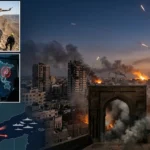

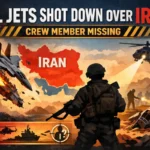
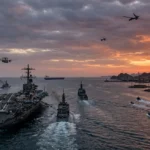




Iran War Day 32: Strategic Shift, ‘Beyond Halfway,’ Aluminum Markets Hit, Paris Bombing Plot Foiled
 March 31, 2026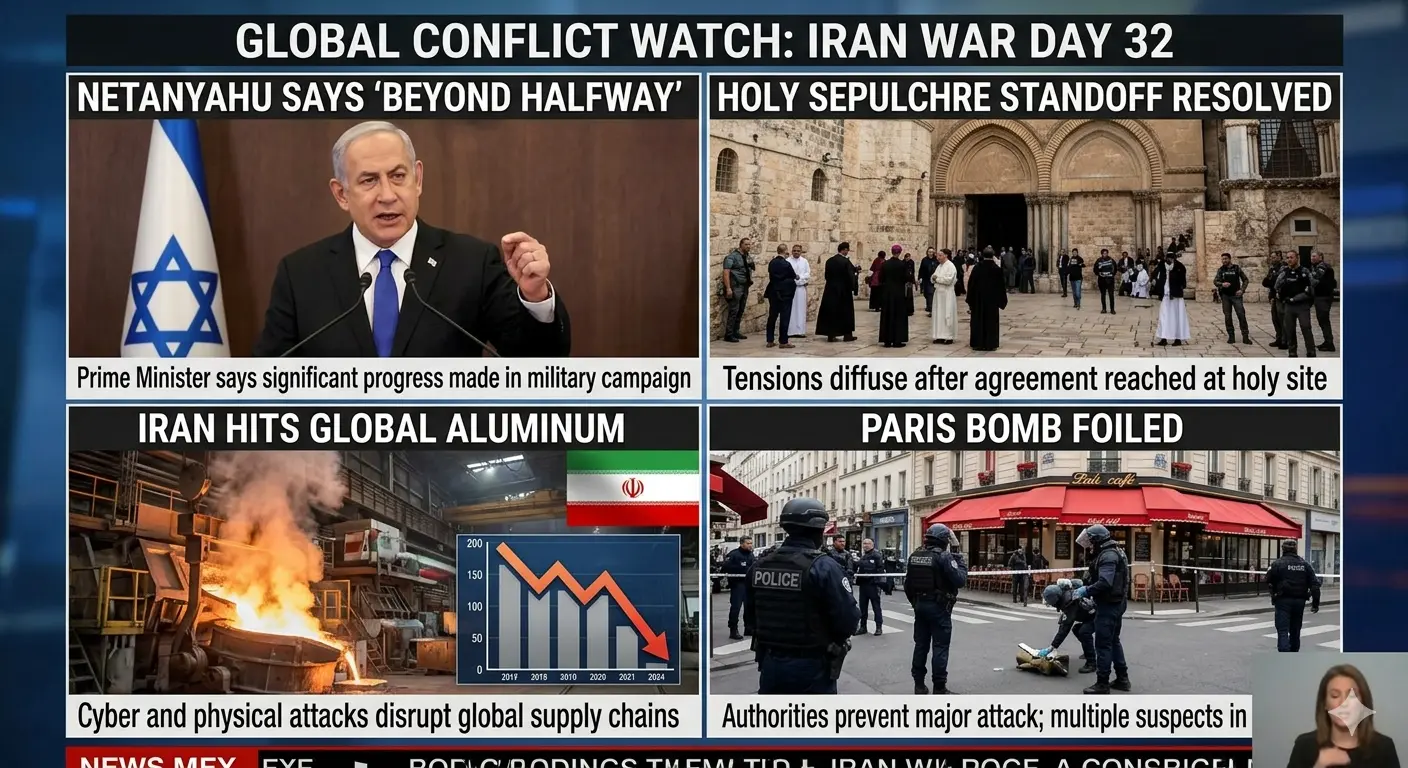
🔴 Breaking News — March 31, 2026
Key Contents :
Netanyahu Says “Beyond Halfway,” Holy Sepulchre Standoff Resolved, Iran Hits Global Aluminum, Paris Bomb Foiled
By WorldWire News Desk · March 31, 2026 · Verified · Updated 7:00 AM IST
Tuesday, March 31, 2026 — the Iran war enters its 32nd day with the battlefield, diplomatic front and global economy all moving simultaneously. Prime Minister Netanyahu declares the war “beyond the halfway point.” Iran has confirmed the death of its IRGC Navy chief — the man who ordered the Hormuz closure.
Holy Week in Jerusalem is in crisis after Israeli police blocked the Latin Patriarch from Palm Sunday Mass, before a last-minute deal restored access. Iran struck Gulf aluminium smelters, putting a new hole in global supply chains. Paris police foiled a bomb attack on a Bank of America building. And Zelensky signed defence cooperation deals with Gulf states. Here is everything verified as of this morning.
“Halfway”Netanyahu on war progress
ConfirmedIRGC Navy Chief Tangsiri Dead
April 6Days to Trump’s Energy Deadline
40+Iranian Officials Killed in War
Netanyahu: War “Beyond Halfway” — But No End Date
In his clearest public assessment of the war’s trajectory yet, Israeli Prime Minister Benjamin Netanyahu declared Monday that Operation Roaring Lion has achieved “more than half” of its military objectives — while refusing to give any timeline for when it would end. Speaking to US conservative broadcaster Newsmax, Times of Israel reports Netanyahu said: “It’s definitely beyond the halfway point
. But I don’t want to put a schedule on it” — adding that he measured progress “in terms of missions, not necessarily in terms of time.” Among the completed objectives: the deaths of Supreme Leader Khamenei, IRGC commander-in-chief Pakpour, security chief Larijani, and now IRGC Navy chief Tangsiri — along with the destruction of approximately two-thirds of Iran’s missile and drone production capacity.
However, Netanyahu’s assurance of progress stands in tension with what the battlefield shows. Times of Israel reports that Israeli and US leaders have now ordered the IDF to pivot to causing “economic damage” to the Iranian regime, targeting Iran’s civilian infrastructure — after having largely exhausted its original list of pure military targets.
Iran struck back with six missile salvos on Monday alone, confirming Tangsiri’s death and vowing that his successor would continue his mission of controlling the Strait.
“It’s definitely beyond the halfway point. But I don’t want to put a schedule on it — in terms of missions, not necessarily in terms of time.” — PM Benjamin Netanyahu, Newsmax, March 30, 2026
IRGC Navy Chief Tangsiri Confirmed Dead — The Man Who Ordered Hormuz Closed
Iran officially confirmed on Monday the death of Admiral Alireza Tangsiri — commander of the IRGC Navy since 2018 and the architect of the Strait of Hormuz blockade. Al Jazeera reported that Iran’s state media confirmed Tangsiri died from injuries sustained in an Israeli strike at a naval command centre in the port city of Bandar Abbas — directly adjacent to the Strait — in the early hours of March 26.
The IDF confirmed all of the IRGC Navy’s key commanders were killed in the same strike. Jerusalem Post noted that Tangsiri had personally managed the day-to-day blockade operations — posting updates on which ships were permitted to transit the Strait, transforming the world’s most important oil shipping lane into a geopolitical weapon. His death is one of the most strategically consequential assassinations of the war, raising the possibility — though not the certainty — that the blockade may be harder for his successors to administer with the same precision.
The list of senior Iranian officials killed in this war now exceeds 40, according to Wikipedia’s live tracker, including the Supreme Leader, IRGC commander-in-chief, multiple generals, ministers and intelligence chiefs. Iran’s new Supreme Leader — Mojtaba Khamenei, son of Ali — was appointed by the Assembly of Experts on March 7 and has so far survived multiple assassination attempts.
Holy Sepulchre Standoff — Cardinal Blocked, Then Easter Deal Struck
One of the most globally resonant flashpoints of the week erupted in Jerusalem on Palm Sunday when Israeli police physically blocked Cardinal Pierbattista Pizzaballa — the Latin Patriarch of Jerusalem — from entering the Church of the Holy Sepulchre to celebrate the traditional Palm Sunday Mass. NBC News called it “the first time in centuries” that Palm Sunday Mass could not be celebrated at the site where many Christians believe Jesus was crucified.
Israeli authorities cited security concerns — Iranian ballistic missiles had struck near the Old City in the days prior, with fragments reportedly landing metres from the church itself.
The incident triggered immediate international condemnation. EU foreign policy chief Kaja Kallas denounced it as a “violation of religious freedom.” US Ambassador Mike Huckabee called it an “unfortunate overreach already having major repercussions around the world.”
Israeli President Isaac Herzog called the Patriarch personally to express his “great sorrow.” By Monday, Times of Israel confirmed that Israeli authorities and Catholic Church leaders had reached a formal agreement allowing Holy Week services to proceed — with live broadcasts arranged for sites that cannot be safely accessed in person. The Vatican confirmed its Secretary of State Cardinal Parolin and top diplomat Archbishop Gallagher met with Israel’s ambassador to resolve the matter. Easter Sunday services at the Church of the Holy Sepulchre will now proceed on April 5.
Iran Blows a New Hole in Global Aluminium Supply — Gulf Smelters Hit
In an expanding economic front, Iran struck aluminium smelting facilities across the Gulf this week — dealing a new blow to global industrial supply chains already battered by the Hormuz blockade. Times of Israel reports that Iran has “blown a hole in the US aluminium supply chain” with strikes on Gulf smelters, including the Aluminium Bahrain (Alba) plant — one of the world’s largest aluminium producers.
CNBC notes that aluminium prices on global commodity exchanges jumped 7% on Monday morning as markets priced in the risk of sustained production disruptions. Aluminium is a critical input for aerospace, automotive, construction and defence manufacturing — sectors already under pressure from the war’s supply chain disruptions.
Iran’s strategic logic is increasingly clear: unable to stop the US-Israeli air campaign militarily, Tehran is attempting to make the economic cost to the West and its Gulf allies prohibitive — striking energy infrastructure, tanker routes, industrial facilities and military bases simultaneously to create maximum attrition.
Paris Police Foil Bomb Attack on Bank of America Building
In a chilling development that underscores the Iran war’s global reach, The Guardian reports that French police foiled an attempted bomb attack outside the Bank of America building in Paris’s 8th arrondissement — the city’s premier financial and diplomatic district.
A suspect was arrested carrying a homemade explosive device. French authorities have launched a terrorism investigation, with initial intelligence reports suggesting a link to Iran-aligned networks operating in Europe as part of a broader campaign of economic and symbolic disruption tied to the war. The US Embassy in Paris issued an alert to American citizens in the city to exercise heightened vigilance near financial institutions and government buildings.
Zelensky Signs Gulf Defence Deals — Ukraine Enters the War’s Diplomatic Web
Ukrainian President Volodymyr Zelensky arrived in the Gulf on Sunday on a whirlwind diplomatic mission, signing defence cooperation agreements with Qatar and Saudi Arabia on countering Iranian missiles and drones. The Guardian reports a third agreement with the UAE is expected to be finalised this week.
The deals involve the transfer of Ukrainian expertise in electronic warfare, counter-drone systems and radar technology — areas where Kyiv has developed significant battlefield experience defending against Russia’s drone and missile campaigns. The agreements represent a remarkable turn: Ukraine, fighting its own war for survival against Russia, is now becoming a defence technology supplier to Gulf states facing a separate but technologically analogous Iranian aerial threat.
Michigan Synagogue Attacker Was Hezbollah-Inspired — FBI
The FBI confirmed Monday that the armed man who rammed his pickup truck into the Temple Israel synagogue in West Bloomfield Township, Michigan on March 13 was carrying out a Hezbollah-inspired terrorist attack.
Times of Israel reports that FBI Detroit chief Jennifer Runyan stated the suspect — identified as Ayman Ghazali — had recorded a video before the attack saying he wanted to “kill as many of them as I possibly can.” “We assess this attack to be a Hezbollah-inspired act of terrorism purposely targeting the Jewish community and the largest Jewish temple in Michigan,” Runyan said — the first confirmed act of Hezbollah-inspired domestic terrorism on US soil since the Iran war began.
Trump: Deal “Could Be Soon” — But Rubio Warns Talks May Fail
Times of Israel and CNBC both confirm that President Trump declared Monday that the killing of Iran’s leaders “truly is regime change” and that a deal to end the war “could be soon.” However, Secretary of State Marco Rubio immediately struck a more cautious note, warning that Washington must be ready for the “probability” of talks failing — the most direct admission yet by a senior administration official that diplomacy may not succeed before the April 6 energy strike deadline.
Iran’s new Supreme Leader Mojtaba Khamenei has yet to make any public statement on ceasefire terms, adding a further layer of uncertainty to a diplomatic picture that grows more complex by the day.
As the calendar turns to April tomorrow and the critical April 6 deadline looms, the war is simultaneously intensifying militarily, expanding economically and generating new domestic and diplomatic crises across the world. The next seven days may be the most decisive of the entire conflict. Stay with WorldWire for live updates throughout the day.
Sources
Times of IsraelAl JazeeraNBC NewsJerusalem PostCNBCThe GuardianThe Guardian — UkraineWikipediaWikipedia — WarReutersBBCCNN
All reporting verified from Times of Israel, Al Jazeera, NBC News, Jerusalem Post, CNBC, The Guardian, Reuters, BBC & Wikipedia · March 31, 2026.Follow worldwire iDAY 31 : Pentagon Plans Ground Operations, Houthis Enter War. for more upईरान युद्ध दिन 31: पेंटागन का ज़मीनी ऑपरेशन प्लान, हूती युद्ध में कूदे, Pope ने युद्ध को ठुकराया .dates .